
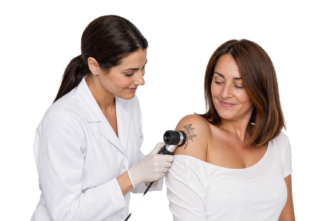
We’ll examine your tattoo (density, colors, age) and your medical history. We’ll take photos, clarify your goals together, and provide a quote and a schedule.
Make an appointmentHow does laser tattoo removal work?
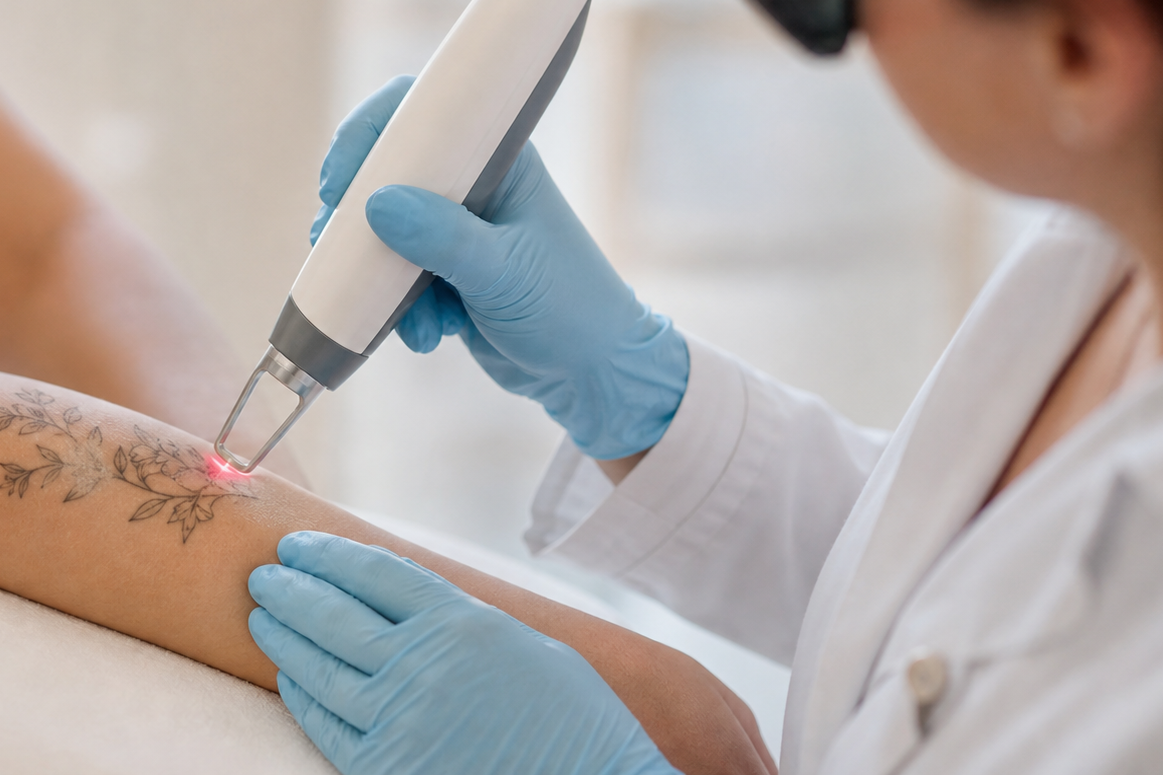
Laser tattoo removal is a medical procedure that removes or lightens a tattoo without surgery: ultra-short pulses break up the ink, which the body then eliminates naturally.
When you get a tattoo, the needle deposits pigments into the dermis, beneath the skin’s surface layer. These particles are too large for immune cells to remove—and that is precisely what makes a tattoo permanent.
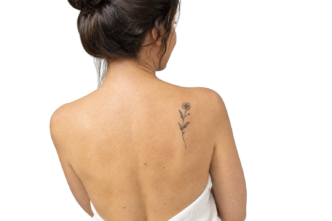
Tattoo removal is based on the principle of selective photothermolysis. The laser emits an extremely brief light pulse, which is selectively absorbed by the pigment. The energy transmitted causes a mechanical and thermal shock that breaks down the ink particles into much smaller fragments. Macrophages—the cells responsible for cleaning up—then transport these fragments to the lymphatic system, where they are naturally eliminated. This mechanism explains why a tattoo continues to fade for several weeks after each session and why appointments are spaced out: the removal process is biological, not optical.
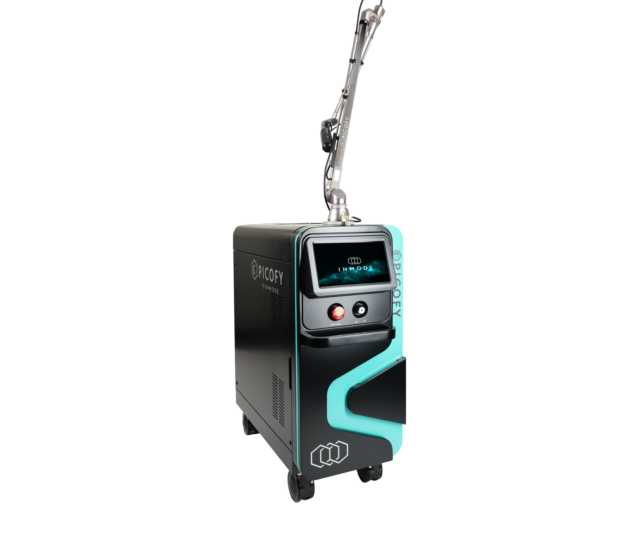
At Claris Clinic, we use InMode’s Picofy®, a state-of-the-art picosecond laser. Its 300-picosecond pulses, about a thousand times shorter than those of conventional Q-switched lasers, deliver very high peak power (up to 2.0 gigawatts), which fragments the pigment through a photoacoustic effect while transferring less heat to surrounding tissue. The result: finer fragmentation of the ink, fewer sessions required for the same level of effectiveness, and better preservation of the skin.
Which tattoos can be treated?
How well a tattoo responds to laser treatment depends primarily on its colors: each pigment absorbs a specific wavelength. The Picofy® operates at 1064 and 532 nanometers.
- Black and dark tattoos: Black absorbs a very large portion of the light spectrum, making it the easiest color to treat (1064 nm), with excellent results in the vast majority of cases.
- Red, orange, brown: good response at 532 nm.
- Green and blue: more resistant to these wavelengths; the lightening process is slower and sometimes incomplete. The initial assessment allows for an honest evaluation of what is achievable.
- Yellow: the hardest color to remove, regardless of the type of laser.
- Amateur and professional tattoos: both can be removed; whether a tattoo is amateur or professional is not, in and of itself, a predictor of the number of sessions required.
- Lightening before cover-up: Many patients do not seek complete removal but rather lightening sufficient for a new tattoo; this goal requires significantly fewer sessions.
- Permanent makeup (eyebrows, lips, eyeliner): These pigments often contain titanium dioxide or iron oxide, which may darken when exposed to laser light; a preliminary test on a small area is essential.
Calculate the cost of your laser tattoo removal: get an instant quote
A tattoo removal session starts at 95 euros (including tax) at Claris Clinic, depending on the size of the tattoo. The total cost depends on the size, the density of the ink, the colors, and the number of sessions required: a precise estimate is provided during the initial consultation, once the tattoo has been examined.
| Format | Descriptive label | Approximate Area | Suggested price per session |
|---|---|---|---|
| XS | Smaller than half a credit card (finger, initial, small symbol) | Up to 10 cm² | 95 euros (including tax) |
| S | Up to a credit card | 10 to 25 cm² | 145 euros (including tax) |
| M | Up to a postcard | 25 to 60 cm² | 195 euros (including tax) |
| L | Up to A5 size | 60 to 120 cm² | 245 euros (including tax) |
| XL | Beyond that (cuffs, back, etc.) | Over 120 cm² | Priced on a case-by-case basis |
| Very colorful or complex tattoos | Dense multicolored designs, overlapping layers, specialty inks | All sizes | Specific price determined during the consultation |
| Eyebrows / Permanent Makeup | After a mandatory preliminary test | – | 120 euros (including tax) per session |
The Benefits of Laser Tattoo Removal
- Picoseconds: pulses a thousand times shorter than those of conventional lasers, more effective on ink and gentler on the skin
- Selective: The energy targets the pigment, while surrounding tissues are spared
- Outpatient care: short sessions, immediate return to normal activities
- Gradual: Each session lightens your hair a little more, and you can track your progress in the before-and-after photos
- Flexible: The protocol adapts to your goal—whether it's complete removal or lightening before covering
- Sidebar: This procedure is performed in a clinical setting and is important for dark skin types, colored inks, and permanent makeup
Frequently asked questions
How many sessions should I plan for, and how often should they be scheduled?
Expect 3 to 9 sessions—6 on average—spaced 6 to 8 weeks apart: this is the time the body needs to eliminate ink particles between sessions. Four factors are more important than the others: the density of the ink, its colors, the tattoo’s location, and how long it has been there. Simply lightening the tattoo before covering it up requires significantly fewer sessions than complete removal. You’ll receive a precise estimate during the initial consultation.
How much does it cost to have a tattoo removed with a laser?
At Claris Clinic, a tattoo removal session starts at 95 euros (including tax), depending on the area being treated—the calculator above provides you with an instant estimate. The total cost depends on the number of sessions required, which is estimated during the initial consultation after examining the tattoo, and a written quote is provided. Lightening a tattoo before covering it up is significantly less expensive than complete removal.
Does tattoo removal really work, and are the results permanent?
Yes: Pigments that are broken down by the laser and then eliminated by the body do not return. However, complete removal is not always guaranteed: depending on the ink, the colors, and the history of the tattoo, a residual mark or a slight difference in texture may remain. We provide an honest assessment of what can be achieved as early as the first appointment, rather than waiting until the sixth session.
Is the treatment painful?
The sensation is most often compared to thatof a rubber band snapping against the skin, repeated rapidly. It is brief: most sessions last only a few minutes. Bony areas and the extremities are more sensitive than the arm or back; an anesthetic cream can be applied beforehand to sensitive areas.
How does the skin feel after a session, and what are the side effects?
The area turns white for a few minutes immediately after the laser treatment, then becomes red and swells slightly for 24 to 48 hours. Scabs or small blisters may appear: leave them alone. Published data indicate that complications occur in about 8% of treatments, primarily involving swelling and blisters; scarring remains rare, occurring in about 0.2% of cases. The treated area must be protected with SPF 50+ sunscreen throughout the entire treatment course; this is why we recommend starting between October and April.
Can we treat a recent tattoo that has already been treated elsewhere, or permanent makeup?
A recent tattoo must first heal completely, which takes several weeks; tattoos less than one year old require more cautious treatment settings. A tattoo that has already been treated elsewhere can be treated here: please let us know the type of laser used, the number of sessions, and any reactions you experienced; this information helps us determine the appropriate settings. Permanent makeup (eyebrows, lips, eyeliner) requires a preliminary test on a small area, as certain pigments may darken when exposed to the laser.
Your journey in 3 steps
- Preparation
- Treatment
- Follow-up

A short session performed while wearing eye protection; the skin turns white and then red as the laser passes over it. A bandage and soothing cream are applied at the end of the session.
Make an appointment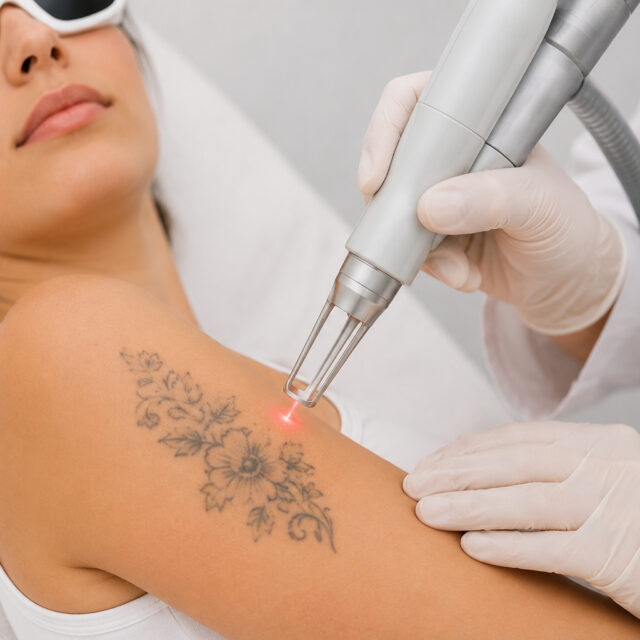
Protect the area from the sun; leave scabs in place; schedule the next session 6 to 8 weeks later. Take follow-up photos to adjust the settings.
Make an appointment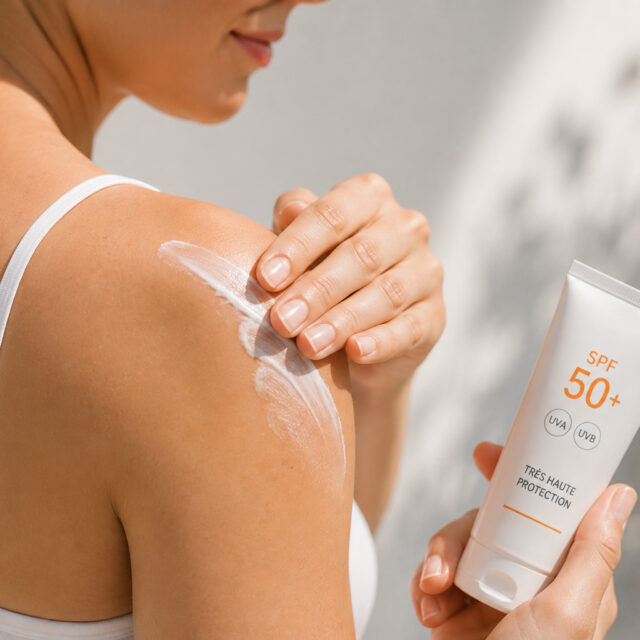
At a glance

Duration of treatment
10 to 30 minutes, depending on the surface area

Number of sessions
From 3 to 9, depending on the tattoo; 6 on average

Intervals Between Sessions
6 to 8 weeks

Social exclusion
None; local redness lasting 24 to 48 hours

Recommended time of year
From October through April (strict sun protection during the protocol)
The result
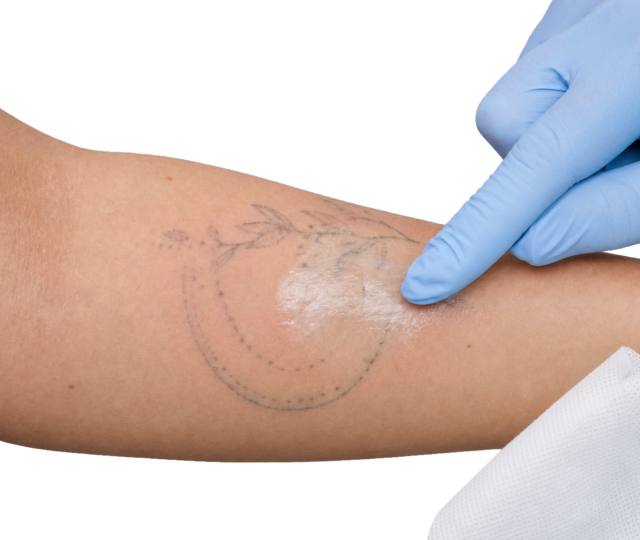
The tattoo gradually fades, session by session. The process is not linear: the first few sessions often produce the most noticeable change, and then the pace slows as the pigment density decreases. Follow-up photos taken at each appointment allow us to objectively track this progress.
Complete removal is not guaranteed. Certain inks, colors, and covered tattoos leave a residual mark—sometimes a slight difference in texture or pigmentation. We prefer to mention this at the first appointment rather than during the sixth session. If your goal is to cover up the tattoo, the necessary lightening is achieved much sooner, and the treatment ends there.