


Permanent laser hair removal is often touted as a long-lasting and effective solution for getting rid of body hair. But its effectiveness depends on several factors, starting with the color and type of hair. Light, dark, or red hair: not all hair types respond to the treatment in the same way. Before you get started, it’s important to fully understand how this method works, who it’s intended for, and what results you can expect based on your individual profile. Let’s take a closer look.
The different types of hair
Laser hair removal is an increasingly popular method of permanently eliminating hair. However, its effectiveness varies according to the type of hair. It’s essential to understand the characteristics of each type of hair to anticipate the results.
Light-colored hairs
Blond or white hair contains very little melanin, the pigment that the laser targets to destroy the hair follicle. Laser hair removal is therefore generally less effective on light-colored hair, except with certain latest-generation technologies.
 Red hair
Red hair has a particular concentration of pheomelanin, a pigment different from the eumelanin found in dark hair. This complicates laser treatment, although improvement is possible with specific lasers, such as the alexandrite or Nd:YAG laser.
Dark hairs
Dark hairs are the easiest to treat. Thanks to their high melanin content, they absorb laser energy better, enabling faster, more effective destruction of the hair bulb.
How laser hair removal works
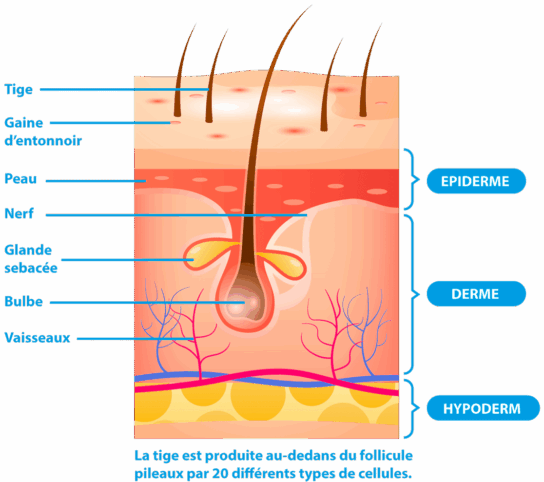
Laser hair removal is based on the principle of selective photothermolysis: the laser emits light that is absorbed by the hair’s melanin, generating heat that destroys the follicle without damaging the surrounding skin.
Laser hair removal process
Once the hair has been targeted, the laser’s pulsed light heats the follicle until it is eliminated. The hair falls out naturally a few days after the session. This method is progressive and requires several sessions to treat the entire hair cycle.
Effectiveness of laser hair removal on different hair types
Effectiveness varies according to hair color, thickness and skin type. Darker hairs on lighter skin offer the best results. Recent technologies, however, are expanding the range of treatment options.
Factors to consider
 Skin type
Phototype (from I to VI) influences the choice of laser. Darker skins require adapted lasers (Nd:YAG type) to avoid the risk of burning or hyperpigmentation.
Hair color
As mentioned, darker hairs respond better. Hair that is too light or white may require other techniques (electrolysis, pulsed light hair removal).
Hair thickness
The thicker the hair, the more energy it absorbs. Thinner hairs require more sessions or may be partially resistant.
Risks and contraindications
Potential risks
Although generally well tolerated, laser hair removal can cause redness, slight burns or temporary pigmentation problems. A medical assessment is recommended.
Contraindications to laser hair removal
Laser hair removal is not recommended:
- in the event of pregnancy
- on tanned or recently sun-exposed skin
- for people taking photosensitizing medication
- for certain skin conditions
Sessions required for permanent hair removal
Recommended number of sessions
In general, 6 to 10 sessions, spaced out, are needed to achieve permanent hair reduction. This figure may vary according to area, gender and hair density.
Session frequency
Sessions are generally spaced 4 to 8 weeks apart to respect the hair growth cycle (anagen phase). Regular follow-up ensures lasting results. 
Advantages of laser hair removal
Sustainability of results
After several sessions, laser hair removal results in a permanent reduction of 80-90% of hair in the treated area. Compared with other methods, this is a long-lasting solution.
Comfort during treatment
The latest equipment is designed to reduce the sensation of pain, thanks to an integrated cooling system. Treatment is fast, precise and well tolerated.
Preparation before laser hair removal
Preliminary tips
- Shave the area 24 to 48 hours before the session
- Avoid sun exposure for 2 weeks
- Do not use self-tanner
- Avoid waxing or electric epilators (bulb must be intact)
Post-treatment recommendations
- Apply a soothing cream (such as aloe vera)
- Avoid the sun and hot baths for a few days
- Do not scratch the treated area
- Wear loose-fitting clothing to avoid chafing
Technological advances in laser hair removal
New techniques
New-generation lasers (diode, Nd:YAG, Alexandrite) now make it possible to treat all skin and hair types with greater precision and less discomfort.
Recent developments in permanent hair removal
Artificial intelligence built into certain devices automatically adjusts parameters according to phototype. Multi-technology platforms enable several types of laser to be combined for personalized, safe treatment.
Conclusion
Laser hair removal is now a reliable, effective, and increasingly accessible method for achieving long-lasting hair removal. Choosing the right practitioner, understanding your skin and hair type, and following the pre- and post-treatment recommendations will help you achieve the best possible results safely.