
What Is Microneedling? Definition and How It Works
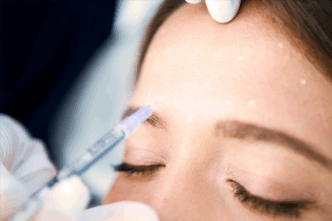
Microneedling, also known as collagen induction therapy (CIT), is a medical aesthetic treatment that involves creating controlled micro-injuries on the skin’s surface using very fine microneedles. These tiny punctures, barely visible to the naked eye, trigger the body’s natural repair response, resulting in increased synthesis of collagen and elastin.
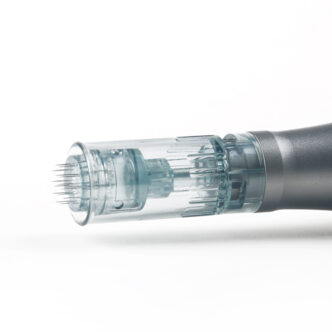
Contrary to popular belief, the procedure is not destructive: it is precisely calibrated to stimulate the epidermis and dermis without damaging the deeper layers. The result is firmer, more radiant, and visibly rejuvenated skin—without surgery.
What is the difference between medical microneedling and consumer-grade derma rollers?
The derma roller is a rolling device equipped with microneedles, available at pharmacies and drugstores. It is a simplified version of microneedling, intended for superficial use only. In a medical setting, professional devices such as the Dermapen offer a level of precision, depth, and sterility that is incomparable to that of a home-use derma roller. The penetration depth of the needles can be finely adjusted depending on the treatment area and the patient’s specific condition.
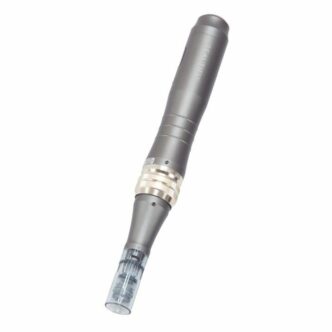
Diagram showing how microneedles penetrate the skin
- Stratum corneum: the first barrier the needles pass through
- Epidermis: Activation of Keratinocytes and Melanocytes
- Dermal-epidermal junction: a key area for stimulation
- Superficial dermis: stimulation of collagen and elastin synthesis by fibroblasts
- Microvascularization: influx of growth factors and initiation of reparative healing
The depth of treatment ranges from 0.25 mm (superficial) to 2.5 mm (treatment of deep scars), depending on the medical protocol used.
How Does Microneedling Work? Mechanism and Technique
During a microneedling session, the practitioner glides a motorized handpiece equipped with sterile, single-use microneedles across the skin. Each pass creates thousands of microchannels in the epidermis and dermis. This process triggers a three-phase biological cascade.
- Inflammatory phase (Day 0 to Day 3): influx of repair cells and release of growth factors
- Proliferation phase (Days 4–21): intensive synthesis of type I, III, and IV collagen and elastin
- Remodeling phase (Day 21 to 12 months): gradual thickening of the skin tissue and visible improvement in skin texture
The resulting skin rejuvenation is therefore a gradual process. The effects continue to improve over several weeks or even several months after the treatment.

The Role of Active Ingredients as a Complement
One of the major benefits of microneedling is the creation of temporary microchannels in the skin barrier. These entry points allow active ingredients to be delivered directly to the dermis, where they would normally not be absorbed at all through conventional topical application. Hyaluronic acid, vitamins C and B3, and growth peptides are thus applied during the session to enhance the results. This approach is similar to mesotherapy, but does not involve injections.
The Benefits and Advantages of Microneedling for the Skin
The benefits of microneedling are numerous and have been documented by many dermatological studies published over the past decade. Here are the main benefits observed in medical practice.
- Natural stimulation of collagen production without surgery
- Visible improvement in the texture and radiance of the complexion
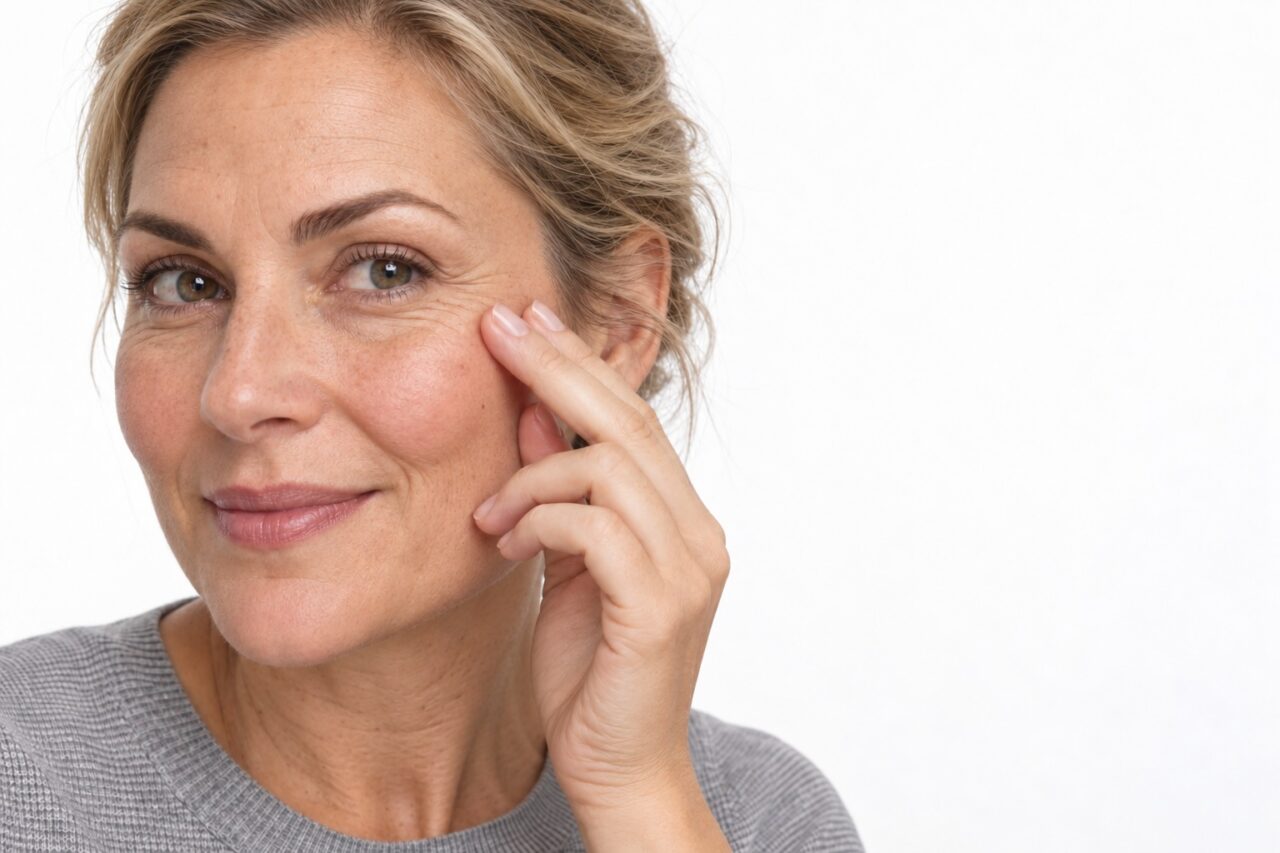
- Reduction of fine lines and wrinkles
- Tightening of Enlarged Pores
- Reducing the appearance of acne or post-traumatic scars
- Evening out skin tone and correcting mild pigmentation spots
- Improved skin firmness through elastin neosynthesis
- Deep hydration when hyaluronic acid is incorporated into the treatment regimen
Microneedling is one of the few cosmetic treatments capable of simultaneously improving the skin’s texture, volume, and radiance, without requiring extended downtime for the patient.
What skin conditions does microneedling treat?
The versatility of microneedling makes it a treatment of choice for addressing a wide range of dermatological and cosmetic concerns.
Main Indications
- Wrinkles and fine lines : forehead wrinkles, crow’s feet, mild nasolabial folds
- Scars: atrophic acne scars (such as “ice pick” or “rolling” scars), superficial surgical scars
- Enlarged pores: visible tightening starting with the second session
- Dull complexion : lack of radiance due to aging or chronic fatigue
- Stretch Marks: Improving the Appearance of Recent or Old Stretch Marks
- Moderate skin laxity: neck, décolletage, hands
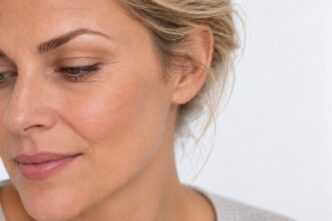
Facial microneedling and lip microneedling
Facial microneedling is the most common application. It covers the entire face, from the cheeks to the forehead, including the eye area (using appropriate settings). The treatment can also be targeted at the lips, particularly to treat perioral wrinkles and improve the definition of the lip contour without resorting to injections. This approach is especially popular among patients seeking a natural-looking result.
Contraindications to Be Aware Of
Microneedling has contraindications that must be evaluated during a preliminary medical consultation.
- Sensitive skin (herpes outbreak, eczema, psoriasis, severe inflammatory acne )
- Currently undergoing treatment with isotretinoin (Roaccutane); treatment must be discontinued at least six months prior
- Anticoagulants or coagulation disorders
- Pregnancy and breastfeeding
- History of keloids
The Microneedling Process: Before, During, and After
Before the session
- A medical consultation is required to assess the indications and contraindications
- In some cases, an anesthetic cream (EMLA) is applied 45 to 60 minutes before the procedure to maximize comfort
- Avoid intense sun exposure in the days leading up to the session
During the session
A microneedling session lasts between 30 and 60 minutes, depending on the areas being treated. The practitioner applies a conductive gel or a solution of active ingredients, then moves the Dermapen head over the skin following a specific protocol. The intensity is adjusted area by area: more superficial on the eyelids, deeper on the cheeks or décolletage.
After the session
- Immediate redness resembling a mild sunburn, which disappears within 24 to 48 hours
- Mild skin sensitivity for 2 to 3 days
- Apply a soothing treatment and SPF 50 sunscreen starting the very next day
- Avoid makeup, swimming pools, and saunas for 48 hours
- Results become visible gradually starting in the second or third week
The Effectiveness of Microneedling: Results and Medical Opinion
The results of microneedling are scientifically proven. Several randomized clinical studies confirm that 3 to 6 sessions spaced 2 weeks apart lead to a significant and lasting improvement in skin quality.
| Condition Treated | Recommended number of sessions | Time until visible results |
|---|---|---|
| Fine Lines and General Anti-Aging | 3 to 4 sessions | 4 to 8 weeks |
| Acne Scars | 4 to 6 sessions | 8 to 16 weeks |
| Enlarged pores | 2 to 3 sessions | 2 to 4 weeks |
| Dull Complexion and Revitalization | 1 to 3 sessions | 2 to 3 weeks |
| Lip Contour (Lips) | 2 to 4 sessions | 4 to 6 weeks |
Skin regeneration continues for up to 6 months after the last session thanks to the remodeling of newly formed collagen. An annual maintenance regimen of one to two sessions is generally recommended to maintain long-term benefits. At Claris Clinic, microneedling can also be combined with an exosome treatment to optimize cellular regeneration.
Prices and Rates for a Microneedling Session at Claris Clinic
At Claris Clinic, the prices for microneedling are as follows (for informational purposes only; an exact quote will be provided during the consultation):
| Package | Estimated price |
|---|---|
| 1 session + LED | 125 €* |
| 4-session package (free sunscreen) | €480* |
| Vampire Lift (Microneedling + PRP + LED) | €355* |
| Vampire Lift – 3-session package | €895* |
* Our prices are indicative and include VAT. The precise estimate will be provided by the specialist during the consultation. All subscriptions are by name and valid for one year.
At Claris Clinic, this cosmetic treatment is available at all three of our Belgian locations: La Hulpe, Brussels, and Liège. A personalized quote is provided during the initial medical consultation, which helps determine the treatment plan best suited to each patient. Multi-session packages are available to support long-term treatments at the most competitive rates.
Dermapen Microneedling vs. Derma-Roller: A Comparison
It is common to confuse the two devices, yet their performance and safety levels are very different.
| Criterion | Dermapen (medical use) | Derma-roller (for home use) |
|---|---|---|
| Depth Accuracy | Adjustable from 0.1 mm to 3 mm | Fixed, not adjustable |
| Sterility | Sterile single-use cartridge | Varies; risk of contamination |
| Treatment Comfort | High (vertical movement, no tearing) | Moderate (rotational movement) |
| Delicate areas (around the eyes and lips) | Precise adjustment | Not recommended |
| Medical Follow-up | Mandatory and included | Not available |
| Clinical Efficacy | Proven by studies | Limited in depth |
In professional aesthetic medicine, the Dermapen is now the gold standard. Its variable-speed motorized technology reduces unnecessary micro-trauma, improves patient tolerance, and ensures consistent results across the entire treated area. The session can be supplemented with LED light therapy or HydraFacial® for optimal results.
Microneedling integrates seamlessly into a treatment regimen combined with other procedures, such as chemical peels, CO2 laser therapy, or Morpheus8® treatment, for comprehensive and long-lasting skin rejuvenation.
FAQ: Frequently Asked Questions About Microneedling
Would you like to find out if microneedling is right for your skin and your aesthetic goals? The practitioners at Claris Clinic welcome you to their locations in La Hulpe, Brussels, and Liège for a personalized, no-obligation consultation. Schedule an appointment today.
See also